Satbayev University Scientists to Improve Oil Pipeline Throughput in Kazakhstan
Specialists are developing solvents for asphaltenes
Scientists at Satbayev University are developing various types of solvents to reduce asphaltene deposition in oil pipelines and on special equipment. Specialists take into account the characteristics of Kazakh hydrocarbons and their production conditions. This was reported by the press service of the Ministry of Science and Higher Education of the republic.
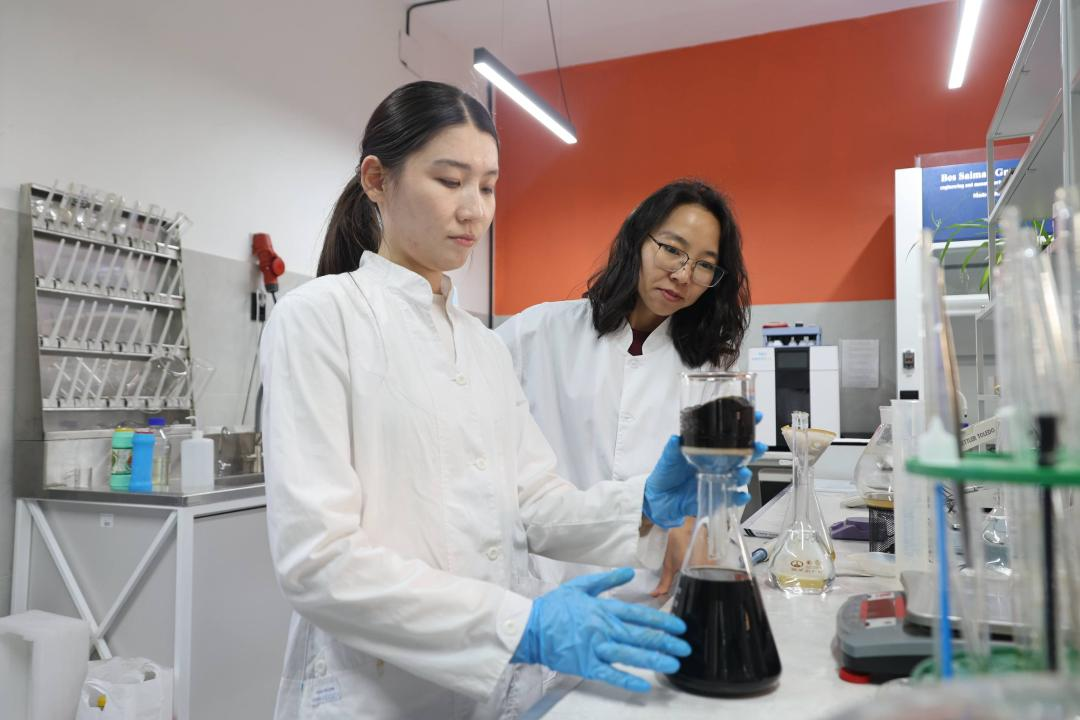
Asphaltenes are heavy components of oil. When physical parameters (temperature, pressure) change, they can combine into larger particles and settle on the surface of pipes. Accumulating, asphaltenes reduce pipeline throughput and degrade equipment performance.
As a basis for development, researchers are considering deep eutectic solvents – multicomponent systems whose properties can be regulated by changing the composition and ratio of components.
The ministry explained that scientists are studying solvents based on choline chloride and betaine in combination with various hydrogen bond donors (glycerin, urea, organic acids). The resulting compositions are tested on Kazakh oil. Specialists plan to reduce asphaltene deposition by 30-50%.
Associate Professor of Satbayev University Sholpan Islam stated that Kazakhstan is a major oil exporter. That is why their project has important practical significance.
Our task is to select a solvent composition that will increase the stability of the oil system and reduce the risk of deposition.
When developing the solvent, researchers evaluate its effectiveness and potential harm to the environment. Using physicochemical analysis methods, it is possible to determine the stability of asphaltenes, the rate of aggregation and sedimentation, as well as changes in oil, the ministry summarized.
Comments