Scientists from Korkyt Ata Kyzylorda University (KU) Balausa have developed a technology for producing paving tiles using combined heat and power plant ash and gravel sand from the Tasboget deposit. They managed to significantly reduce the cost price of the final product, the press service of the Ministry of Science and Higher Education of Kazakhstan reported.
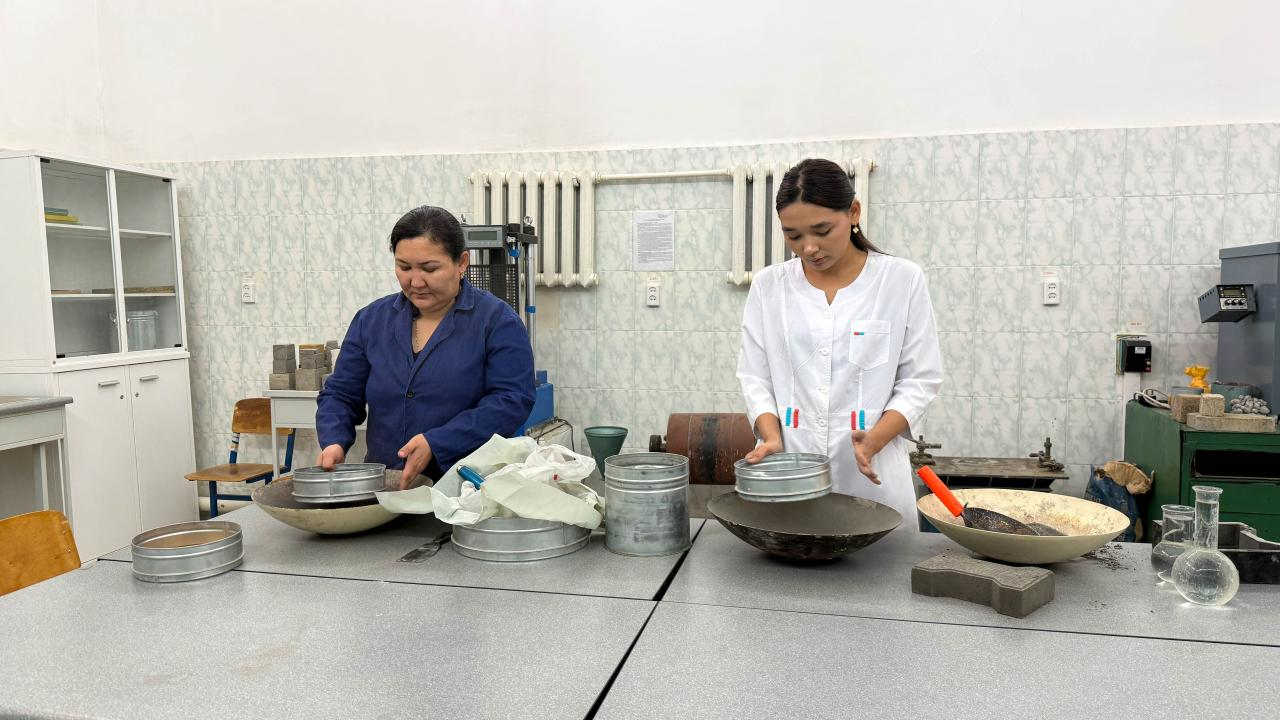
The researchers also aimed to reduce the environmental footprint through the reuse of industrial waste. Gulnur Zhakypova served as the project’s scientific supervisor.
The compressive strength of the tiles with the modified composition reached 75.42 MPa, which is 23% higher than that of the control samples. The new tiles also absorb less water and are more wear-resistant. Their frost resistance rating is F300.
To evaluate the properties of the material, the researchers conducted 45 cycles of laboratory tests and analyzed the microstructure of the samples.
The use of combined heat and power plant ash and gravel sand will reduce the cost price of one cubic meter of tiles from 47,238 to 41,328 tenge. With an annual production volume of 10,000 cubic meters, the savings will reach 59.1 million tenge, the authors of the study calculated.
To test the tiles in real-world conditions, they were laid in the courtyard of a residential building. Over the observation period, no visible cracks or chipping were detected on their surface.
The researchers plan to test the tiles under industrial conditions, as well as carry out an additional environmental assessment to evaluate the likelihood of hazardous elements leaching out. Following that, the specialists intend to launch the commercial production of the building material.